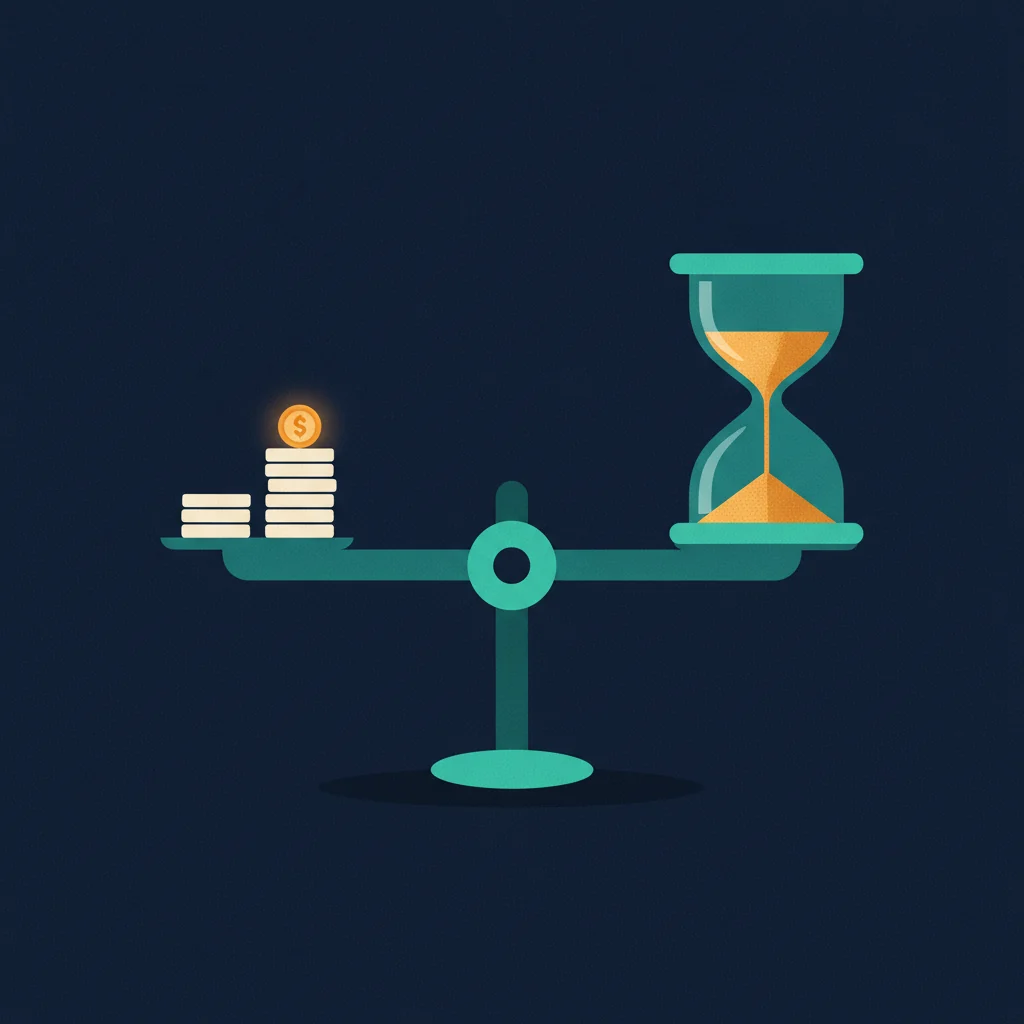
It's the question everyone wants answered and almost nobody publishes: what does this actually cost?
We won't dodge it. We can't give you a single number on a web page — and here's the honest reason why, plus how to work out whether it'll be worth it for you.
Why there's no price list
A one-job build for a three-person office is a completely different thing to a full back-office setup for a firm of thirty. Quoting a flat price for "automation" would be like a builder quoting a flat price for "building work" — meaningless until they know whether you want a shelf put up or an extension.
What we can promise is no games: you get a fixed quote after a free audit call, before you commit to anything. No "contact us for pricing" runaround, no surprise invoices later. You'll know exactly what it costs before a penny is spent.
What actually drives the price
A handful of things move the number up or down:
- How many jobs you're automating. One painful job is far cheaper than a whole department's worth.
- How messy the inputs are. Clean, consistent data is quick. Twenty suppliers all sending different formats takes more work to handle reliably.
- How many systems are involved. Connecting two tools is simpler than wiring together six.
- Whether it's rules or judgement. Simple rule-based automation is cheaper to build than an AI agent that handles varied, unpredictable cases.
None of this is exotic — it's just the difference between a small, contained job and a sprawling one. The audit is where we figure out which yours is.
The number that actually matters
Cost is only half the picture. The real question is what it saves you — and for the right job, that maths is usually straightforward.
Say a member of staff spends a day a week re-keying data and chasing invoices. That's roughly a fifth of their time — and several thousand pounds a year — going into work a computer could do. If automating it costs a fraction of that and pays back within months, the price almost answers itself.
We'd rather you thought about it that way round: not "what does it cost?" but "what is this admin already costing me, in hours and late payments and mistakes?" Often the current situation is the expensive one.
How we keep it honest
Two things keep the cost sensible. First, we start with the job that hurts most, so you see a return before you spend more. Second, if a job won't pay for itself — or shouldn't be automated at all — we'll tell you. We'd rather build the right small thing than oversell a big one.
You can see the kinds of work we take on across our services, and the step-by-step of how a project runs in how we work.
The simplest way to get a real number for your business is the free 20-minute audit: we look at where your week goes, find what's worth automating, and come back with a clear, fixed quote — no obligation either way.